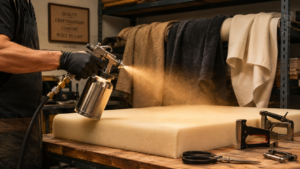
Adhesive spray guns are powerful tools. They help bond materials quickly, evenly, and efficiently across industries like automotive repair, roofing, flooring, furniture manufacturing, and insulation bonding. But here’s the truth no one likes to admit until it’s too late: when adhesive spray guns are used incorrectly, they can be dangerous.
From airborne chemicals to high-pressure equipment, the risks are real, but completely manageable. With the right adhesive application safety measures, you can protect your team, your workspace, and your results (while keeping OSHA off your back and your productivity on track).
Let’s break it down; no jargon, no scare tactics, just smart safety practices that actually work.
Why Adhesive Application Safety Measures Matter
Imagine this: a rushed job, poor ventilation, no gloves, and a clogged spray gun that suddenly releases pressure. Best case? A mess. Worst case? Burns, respiratory issues, or long-term health problems.
Adhesive application safety measures aren’t about slowing down production, they’re about working smarter and safer. When safety protocols are followed:
- Adhesive bonds perform better
- Equipment lasts longer
- Downtime is reduced
- Workers stay healthy and productive
Safety isn’t a buzzword. It’s a business advantage.
Understanding the Hazards of Adhesive Spraying
Before we jump into solutions, let’s talk about the real hazards of adhesive spraying so you know what you’re protecting against.
Common risks include:
- Chemical inhalation from fumes or aerosols
- Skin and eye irritation from direct contact
- Burns from hot-melt adhesives
- Pressure-related injuries from faulty hoses or guns
- Fire hazards from flammable adhesives
Adhesives are engineered to bond aggressively, so when they end up where they shouldn’t (like your lungs or eyes), problems happen fast.
Adhesive Spray Gun Safety Tips That Actually Work
Let’s move from risk to action. These adhesive spray gun safety tips are practical, proven, and easy to implement on any job site.
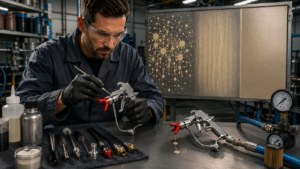
1. Inspect Equipment Before Every Use
Think of this as a pre-flight check, except the plane is your spray gun.
Check for:
- Cracked hoses
- Loose fittings
- Clogged nozzles
- Worn seals
A small leak under pressure can quickly turn into a big problem. Regular inspections help ensure the safe use of adhesive guns and prevent unexpected failures mid-application.
2. Maintain Proper Ventilation
Adhesives release fumes, and those fumes don’t belong in your lungs.
Best practices:
- Use spray guns only in well-ventilated areas
- Install exhaust systems or fans when indoors
- Never spray in confined spaces without airflow
If you can smell the adhesive strongly, that’s your cue, your ventilation needs improvement.
3. Follow Manufacturer Instructions (Yes, All of Them)
We know reading manuals isn’t exciting. But manufacturers specify:
- Correct pressure levels
- Temperature limits
- Compatible hoses and nozzles
- Safe cleaning procedures
Ignoring these guidelines increases the hazards of adhesive spraying and shortens equipment lifespan. The manual exists so you don’t have to learn the hard way.
4. Control Pressure and Temperature
More pressure does not mean better bonding, it means higher risk.
- Use only the recommended pressure settings
- Monitor hose and gun temperature with hot-melt adhesives
- Never override safety controls
Controlled pressure equals consistent application and safer operation.
Personal Protective Equipment for Adhesive Work: Your First Line of Defense
If adhesive safety had a superhero, it would be PPE. The right personal protective equipment for adhesive work dramatically reduces injury risk.
Essential PPE includes:
- Chemical-resistant gloves to prevent skin contact
- Safety goggles or face shields to protect eyes
- Respirators or masks when spraying adhesives with fumes
- Protective clothing to avoid burns and skin irritation
Think of PPE as cheap insurance. Much cheaper than medical bills or lost workdays.
Safe Use of Adhesive Guns Starts with Training
Even the best equipment can be dangerous in untrained hands.
Proper training should cover:
- Correct startup and shutdown procedures
- How to recognize pressure issues
- Safe cleaning and maintenance
- Emergency response if a spill or malfunction occurs
Well-trained operators make fewer mistakes, waste less material, and work more confidently. Safety training isn’t an expense, it’s an investment.
Storage and Cleanup: The Overlooked Safety Step
Once spraying stops, safety doesn’t.
Best practices for storage and cleanup:
- Relieve pressure before disconnecting hoses
- Clean spray guns according to manufacturer guidelines
- Store adhesives away from heat and ignition sources
- Dispose of waste materials properly
Poor cleanup habits are one of the most common and avoidable causes of long-term equipment damage and safety incidents.
Making Safety Part of Your Workflow (Not an Afterthought)
The most effective adhesive application safety measures are built into daily operations, not taped to the wall and ignored.
Create:
- Standard operating procedures
- Daily inspection checklists
- Regular equipment maintenance schedules
- A culture where workers speak up about safety concerns
When safety becomes routine, productivity actually improves. Fewer accidents mean fewer delays, fewer repairs, and better results.
Frequently Asked Questions
What are the biggest hazards of adhesive spraying?
The most common hazards include chemical inhalation, skin and eye contact, burns from hot adhesives, and pressure-related injuries from damaged hoses or spray guns.
What PPE is required when using adhesive spray guns?
At minimum, gloves and eye protection should always be worn. Depending on the adhesive, respirators, protective clothing, and face shields may also be necessary.
How often should adhesive spray guns be inspected?
Spray guns and hoses should be inspected before every use and maintained regularly according to manufacturer guidelines.
Can poor ventilation really cause long-term health issues?
Yes. Repeated exposure to adhesive fumes without proper ventilation or respiratory protection can lead to respiratory problems and other health concerns.
Why is pressure control important for safe use of adhesive guns?
Excessive pressure increases the risk of hose failure, overspray, and injury. Proper pressure ensures both safety and consistent adhesive application.
Safety That Sticks
Adhesive spray guns are incredible tools, but only when used responsibly. By following proven adhesive application safety measures, using proper PPE, and maintaining your equipment, you protect your people, your projects, and your bottom line.
And let’s be honest, nothing slows a job down faster than an avoidable accident.
Gear Up with Confidence
Looking for reliable adhesive spray guns, durable hoses, and safety-ready equipment built for demanding industrial applications?👉 Visit the Spray Guns and Hoses shop today and equip your team with tools designed for performance, durability, and safer adhesive application because great results start with the right gear.