Description
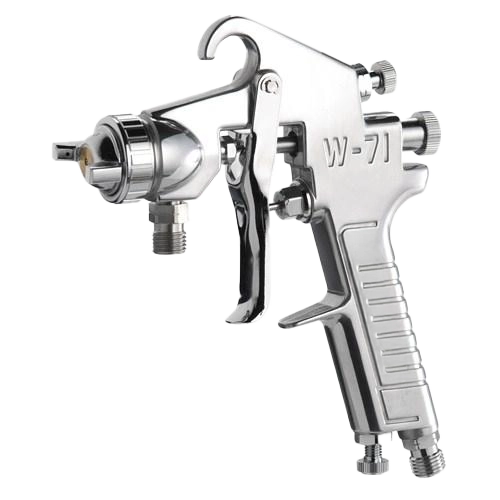
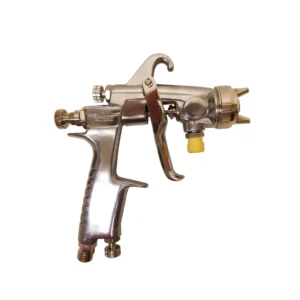
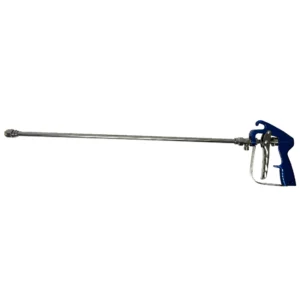
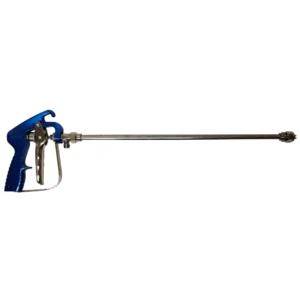
TheW71 Siphon Spray Gun draws adhesives from a removable cup below the gun (siphon/syphon feed). Compressed air at the gun’s air cap atomizes the fluid into a spray pattern; the atomizing airstream creates a vacuum that pulls material up from the cup through a pickup tube. These guns are simple, rugged, and widely used where portability and quick cup changes are helpful.
Main parts
- Fluid cup (siphon cup) attaches under the gun and holds the material.
- Pickup tube – runs from the cup into the gun’s fluid passage.
- 1.5mm fluid needle & nozzle (nozzle set) controls flow and atomization; available in different sizes for thin vs. heavy coatings.
- Air cap – shapes the spray pattern and works with airflow to atomize the fluid.
- Air inlet – standard compressed-air fitting. Air control adjustment at the handle. There is no need for additional air control devices.
Typical features & controls
- Fan-size adjustment – changes horizontal/vertical spray width.
- Fluid flow adjustment – sets how much material passes through the nozzle.
- Airflow/atomization control – adjustable at the gun or via regulator at the compressor.
- Interchangeable nozzles/needles – to match material viscosity (fine finishes to primers/adhesives).
Strengths / advantages
- Portable & quick cup swaps – small batches.
- Simple & durable – fewer moving parts than pressure-fed systems.
- Versatile – can handle a range of fluids (with the right nozzle and thinning).
Limitations
- Less efficient for large-volume jobs — frequent refills
- Slightly coarser atomization (compared with HVLP/finish gravity guns) unless matched with proper nozzle and pressure — so finishing quality depends on setup.
- More sensitive to fluid viscosity — thicker materials may require larger nozzle sizes or thinning.
- Not recommended to be used with pressure systems.
Typical setup & operating tips
- Use the correct nozzle/needle size for the material; start with manufacturer recommendations.
- Adjust fan and fluid controls incrementally to find the cleanest atomization.
Maintenance
- Flush the cup, pickup tube, and gun passages immediately after use with an appropriate solvent.
- Remove and clean the nozzle, needle, and air cap regularly to prevent clogging and poor spray.
- Inspect seals and O-rings and replace if leaking.
- Lightly lubricate the needle packings and trigger pivot points per manufacturer guidance.